Dailies
Photo Wanders, freelancing and process




Welcome
Delmar Joseph / St’a7mes school family
Welcome Figure for Xwaw’chay’ay / Porteau Cove Provincial Park - BC Parks Foundation and St’a7mes School


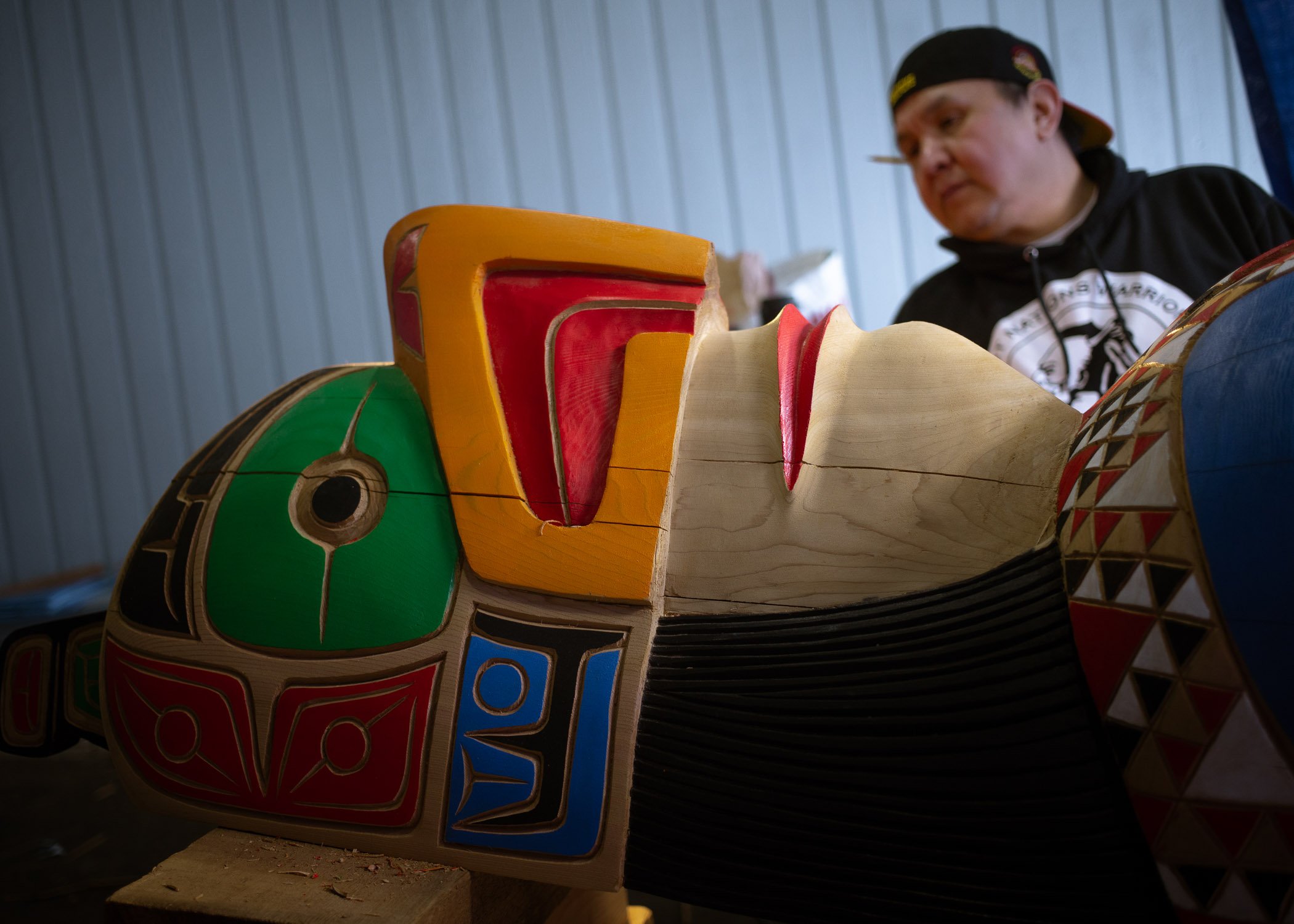




SP'AKWUS FEATHER PARK

“I’m particularly proud of the work of our Squamish mén̓men (children) in designing the playground based on an important Squamish oral history—this important piece of cultural recognition will remind everyone who visits that they are on Squamish land,”
Sxwixwtn Wilson Williams

Spring Rising
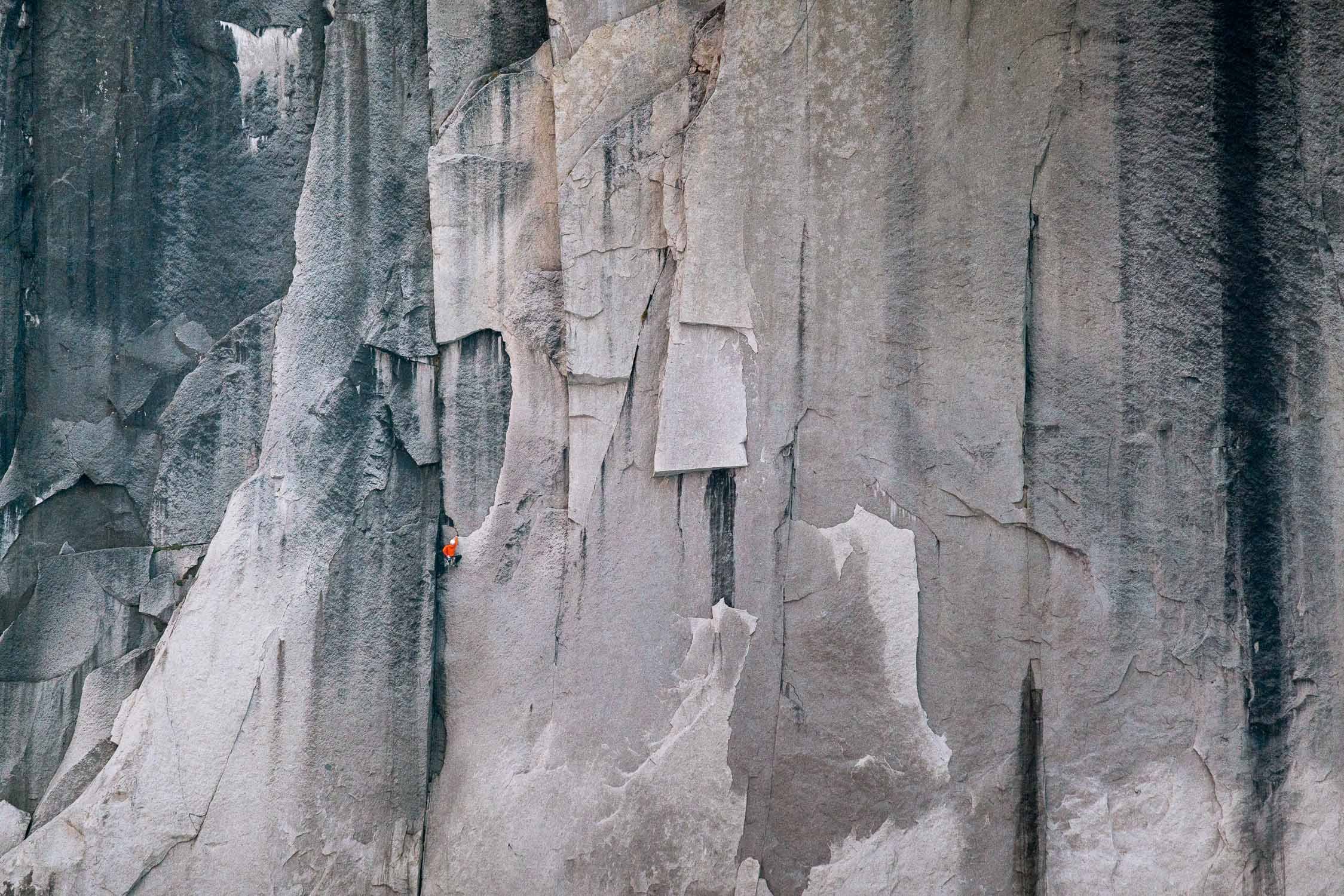
Spring Rising Campaign - Akisqnuk, Shuswap / Bugaboo Provincial Park - Will Stanhope, Whitney Clarke




Welcoming Herring Home

“…The Search for Slhawt’, as the herring project is known, is about more than the forage fish. One of the wider goals is to restore people’s relationship with the sound. For millennia, the spring journey of slhawt’ back to their spawning areas marked the first feast after a long winter for humans and marine beings alike, from seabirds to eagles to porpoises. Communities held ceremonies in late winter that helped welcome slhawt’ home. Roe was gathered and eaten fresh, dried, or smoked—sometimes with salmonberry shoots.” — Lauren Kaljur
Featured at: Marine Stewardship Initiative, Hakai, The Tyee, Global News


Marine Reference Guide
This movie showcases the Marine Reference Guide's goals, accomplishments, and team from 2018-2021. The movie was produced to celebrate World Oceans Day 2021. The Guide is a project on MakeWay's Shared Platform.
To learn more about the Guide please visit our website: https://howesoundguide.ca/

Kelkelokik / Sandy Ward
Sandy Ward / Kelkeloakik - Lil̓wat7úl - Backcountry Mentorship Program Co-Lead at Indigenous Women Outdoors

What Do the Winds Bring?
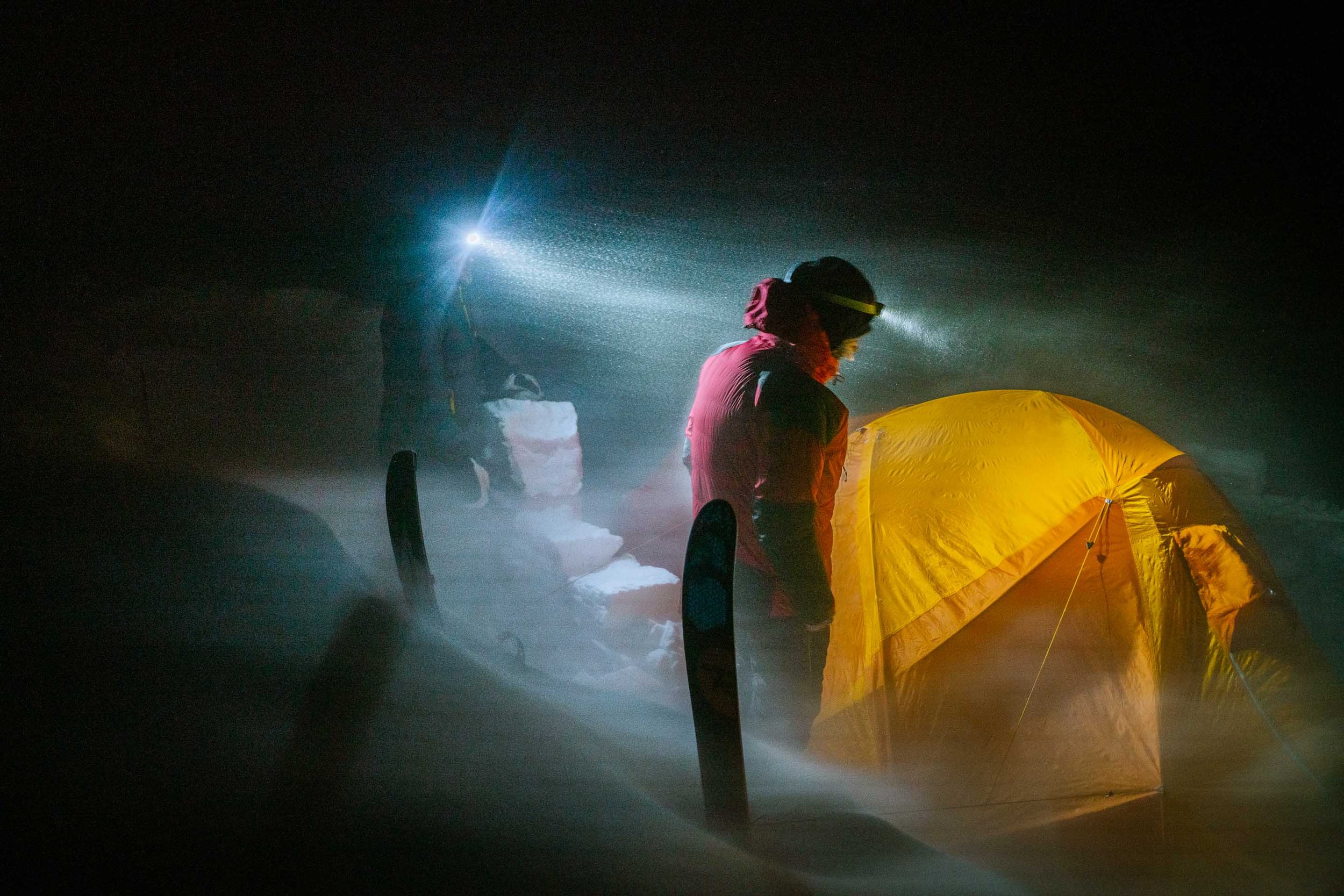
It is an interesting heuristic, that we find it difficult to foresee certain things that exist just beyond our own experience; we tend to prepare for the worst it’s been, not the worst it could be.
Patagonia: The Cleanest Line 2020

The Badge: An Adaptive Ascent
“I’m in over my head.” Luke says
“What do you mean?”
“I don’t think I can do this..” he replies, leaning on the rope a few feet below the hanging belay.
After climbing for 10 hours we have found ourselves halfway up The Sheriff’s Badge, an eight-pitch, 300 metre aid climb on the Stawamus Chief. Below our feet, the wall is slightly overhanging all the way to the black slabs at the base. Above, the rock just 30’ out into space, totally horizontal. I can feel the weight of the wall and I look longingly at the ground. Perhaps we dreamed too big, thought too highly of ourselves, perhaps this really is more than we can handle. it’s not that we can’t it’s that I fear what happens if we do.
I’m worried about Wayne—I can hear him dry heaving below, puking bile into a 1-litre plastic bottle he’d clipped to his harness just for that purpose. The very serious fear that Wayne might die overshadows the reality that we all might die.
We wait for him in in silence. We have headlamps, I feel ok to keep leading, but I need Luke’s help, without it we need to go down, now –before we go over the big roof. Half an hour later, Wayne creeps into view—elbow, knee and a single hip pad scraping as he ascends the rope. I shout down that Luke has something to say.
“I want to go down,” Luke sheepishly blurts.
“Wayne stops his shuffling, his back stiffens, his brows furrow and in a way that is only his, he shouts back, “I never bail!!!”
The only way down is up.
***
Blind Dating
The idea of blind-dating on a serious route makes my skin crawl, humans are complicated creatures and climbing big-walls will bring everything to the surface, all that stuff we try so hard to keep hid. Because of this, I can count the people I will stick my neck out with on one hand: LukeCormier is one of them. Difficult big wall aid climbing takes time and a whole lot of energy, often parties takes days on routes, each piece of gear must be carefully selected, placed and then tested before finally committing your weight to it. Trust is everything. We had agreed to climb with Wayne because he was upfront about his ability, no bravado, just positive energy.
“So; crazy eh? Wayne had enthused at the coffee shop earlier that morning. “A 65 year old climbing the Badge in a day—this is going to be fun!”
A pang of anxiety had gone through me, we had been so wrapped up in the logistics of the wall and Wayne’s energy was so high, we had just assumed he was younger. Not that it really mattered. Wayne’s age wasn’t really an issue, it was his mobility.
As a baby Wayne was diagnosed with Polio; the virus left Wayne with limited use of his right leg and a host of chronic health problems from the resulting Post Polio Syndrome (PPS). His was one of the last American generations without access to a vaccine.
We had left the truck at 8:00 AM. It took 2 hours for Luke and Wayne to travel from the car to the wall while I stumbled back and forth, ferrying the heavy bags, becoming conscious of my movements each time I passed Wayne. At a short, steep section on the trail he paused, placed his hiking poles above him, took the exposed tree roots in his hands, stepped his left foot up and pulled himself into balance. Wayne then had to free his hands in order to manually manoeuver his right leg into position to climb higher. “Grovelling in style” he’d laughed. I resisted the innate urge to help, Wayne has been moving like this for twice as long as I have been alive, he moves with something most people rarely achieve even when given all the physical ability and recreational privilege in the world—Wayne had grace.
Nobody gets to choose their circumstances, but we do get to choose how we exist within them; Wayne has climbed 39 big-walls in his career, many on Yosemite’s El Capitan, often scaling these monstrous walls in a push, chasing the illustrious in-a-day ascent. He ascends the rock by using mechanical ascenders to climb ropes set by his partners. This time those partners were Luke and I … and Luke wanted to bail.
***
“I never bail!”
Wayne’s rallying cry had reignited Luke’s desire to see this through. Fifteen hours in and I’m above the roof climbing by headlamp as dusk falls, one move at a time, keep it going. Luke cleans my gear and sets the lines for Wayne. Progress is slow.
The immensity of the Badge was well known to us—the last “in a day” attempt was 20 years prior and local wall wizard Chris Geisler had taken a bone-breaking fall when he slipped in mundane terrain, a hazard of moving too quickly on the wall.
1:00 AM: I find myself redlined, free climbing overhanging rock in my sneakers, my last piece of gear is beyond my headlamp, all I can see is an uninterrupted nylon cord arching into the darkness below, there is nothing to anchor myself to.
1:01 AM: Tired and thirsty, I shake my arms out one at a time. I can feel the metallic taste of fear clawing at the back of my throat. I focus on my heart rate, try to buy some time… I shove a cam in a misshapen crack but it falls out. With no other choice in the matter I soon find myself 20 feet higher on a small ledge of dirt, safe again. I continue climbing, trusting Luke and Wayne are ok in the inky darkness below.
4:00 AM: It’s light enough to see, I turn off the headlamp, the soft grays of dawn lead me up an awkward corner, the last pitch of the route. I collapse on Sasquatch ledge—the top—it is over. For me anyways. I take my time laying out everyone’s sleeping pads and organize what I can, I look longingly at a cold can of chicken soup but I must wait for Luke. Then I lay down on top of my sleeping bag, with my back to the wall and the valley spreading out below, heading North into the Coast mountains.
6:30 AM: Luke is here. Time slips past and our tired bones sink into the dirt. I almost close my eyes before realizing that Wayne still hasn’t joined us. I roll over a few feet and peer over the edge, following the rope to find him beside a tree. “How you doing Wayne?”
“Doing good!” His reply seems absurd from where I am, it does not look that way— 600ml of bile hangs from his harness, his pee bottle is empty, his movements are strained and the awkward angle of the final pitch is causing him difficulty, causing the right side of his body to scrape up the rock a few inches at a time.
“Where was Wayne when you left him?” I ask Luke,
“By the tree.”
8:00 AM: Wayne arrives, just under 22 hours after we started, looking all of his 65 years. But his eyes, his voice, his smile, bely nothing of his troubles. I think back to the perception of risk, the ability to distinguish real danger and I realize my years of climbing have taught me to wait for truths to reveal themselves rather than cling to expectations. Wayne is here, tired and sore—just like us—and better off for it, just like us.
They say first impressions are most important, and if this were true I might not haveagreed to this climb, let alone pressed on when one partner first started dry-heaving 60’ off the ground, just under 24 hours ago. Wayne’s situation made me uncomfortable but some part of me kept asking, how could I know what’s best for him? As a young man I was always told the value of patience but I had never considered the linkbetween patience, humility and understanding. How the old saying that good things come to those who wait was also a lesson to shed the fallacy that if we don’t understand something right now, it’s not worth knowing.
The mountains offer an opportunity to interact with discomfort and it is too easy to glorify those moments where we feel strong and independent. In my formative years I suffered on a path towards these ideals, mountains were symbols ofthe good that can come to those who wait, as if all that goodness was something I could attain, not something I now realize is meant to be given away.
Mountain Life: Coast Range 2019

The Meaning of Play
Play is so perfectly unproductive and pointless that the word itself barely gives the act any shape. It is something that is hard to define and yet somehow within the purposelessness of it all there exists a world of possibility and potential.
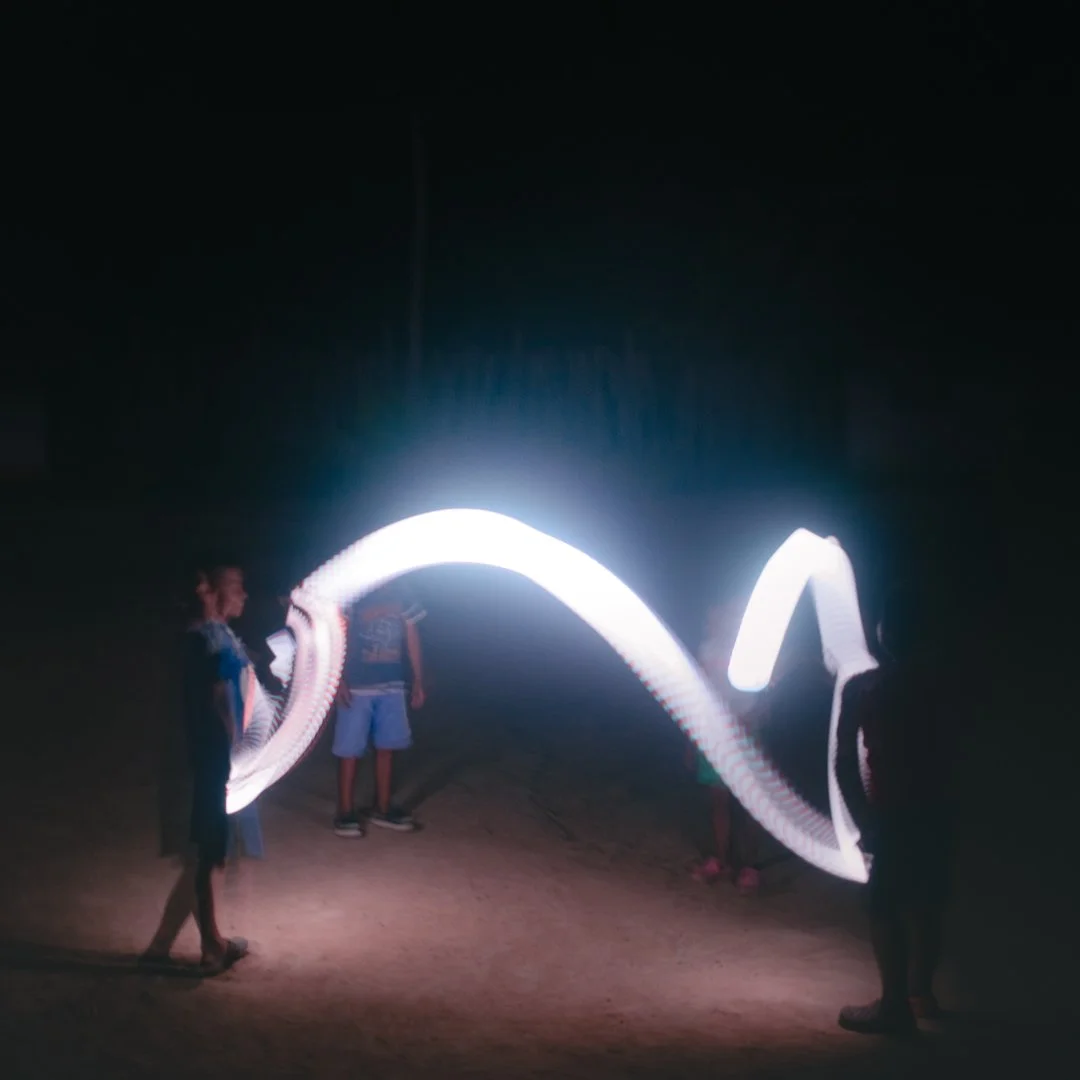
Even the dictionary definition of the word is a meandering, multifaceted affair. Primarily, play is “to engage in activity for enjoyment and recreation rather than a serious or practical purpose.” But you can play or get played, or be a player. You can play a hunch or play the radio, play into(or out) of just about anything---and at the end of the day we must all play the game least the game plays us.
And now, play is playing a new role in early childhood education in BC. In 2019, the BC Ministry of Education released the Play Today handbook for BC educators; a detailed report on the subject. The findings are that when kids play they are more willing to take the next step to push through thresholds (physical or intellectual) and it is this effort that forges new connections in the brain, creating different avenues from which to approach problems. Quite literally, play opens the mind.
This ability to adapt our environment and self-regulate under stress is crucial for a healthy human. Charles E. Pascal; a Special Advisor on Early Learning to the Government of Ontario, describes this as “not about conforming to the expectations of social behavior; rather, self-regulation is about developing one's own internal motivations for adapting to demands and challenges”. Standardizing play for all children in BC schools is a step towards recognizing that it’s no longer about what to learn, but how to learn.
In large part these shifts are occurring because of increased access to Indigenous content, a result of the BC Government's vow to uphold the 94 Calls to Action from the Truth and Reconciliation Commission on Residential Schools of 2015. This has created a place in our classrooms for the First Peoples Principles of Learning--a traditional way of knowing and a holistic approach to education defined as a “comprehension of the parts of something as intimately interconnected and explicable only by reference to the whole.”.
One of these nine principles is that “Learning is [not only] holistic, [but also] reflexive, reflective, experiential, and relational (focused on connectedness, on reciprocal relationships, and a sense of place)”.
As adults, perhaps it’s time we also contemplate what play means in our lives. Is it the self-serving pursuit of unproductive and pointless activities? Is it just “play” when we journey up to the high peaks under pre-dawn skies in the middle of winter? Or ride bikes through the forest by headlamp? The Play Today handbook states that effective learning shares neural pathways with successful life skills and yet just because someone is a good skier doesn’t make them a good person, so at what point does this thing we call “play” end and the rest of our lives begin?
Maybe all this playing is just an opportunity to enhance how we learn and maybe learning is just another word for life. I think what I learned from all this is that as long as we continue to let the children play (and adults too) we’ll all learn how to live better.
Mountain Life: Coast Range 2019

Dark Winter
Deep winter 13 - the last year of the RENOWNED photo challenge
Whistler - Cwítima/Kacwítima (Lil’wat), or Sk̲wik̲w (Squamish).
