Dailies
Photo Wanders, freelancing and process
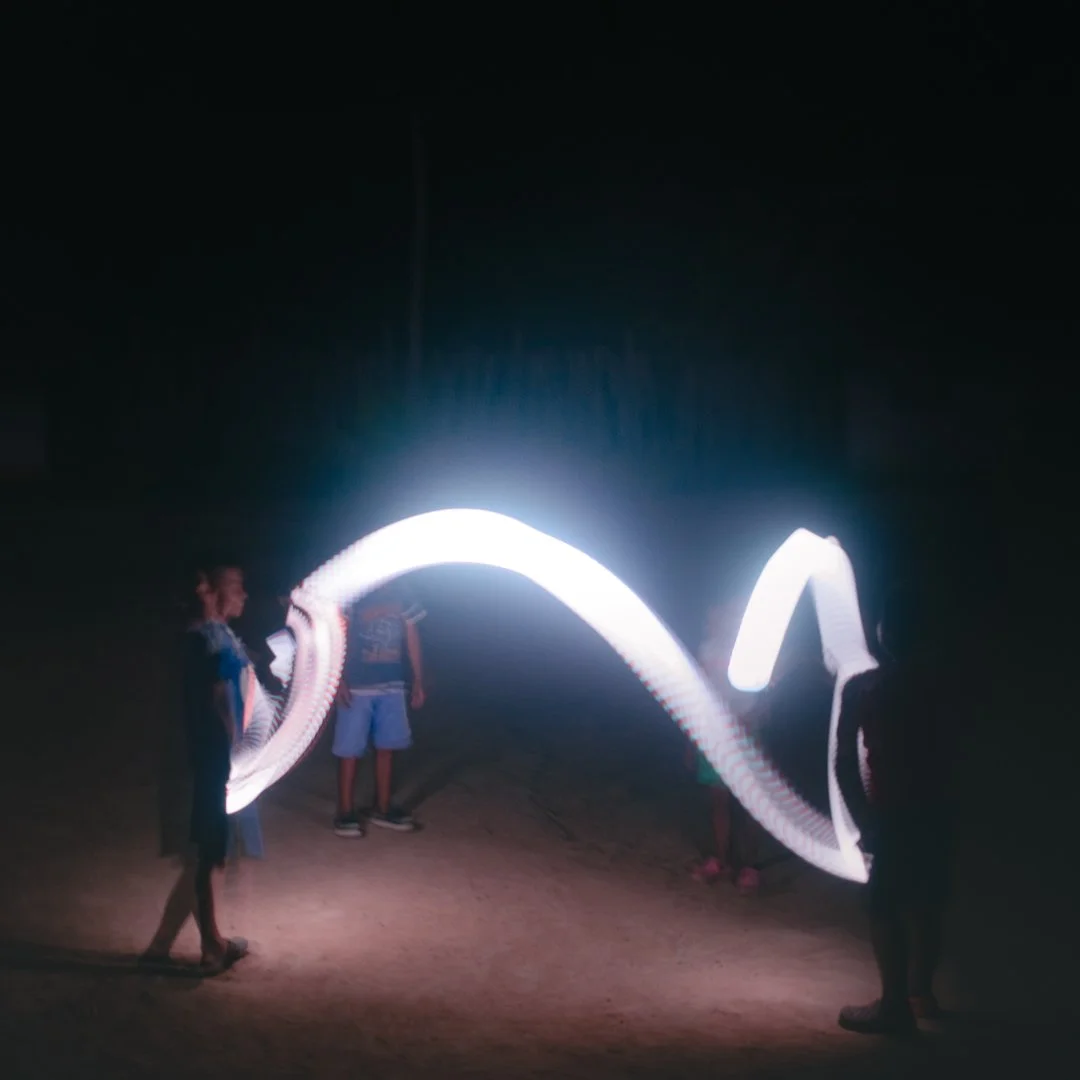
The Meaning of Play
Play is so perfectly unproductive and pointless that the word itself barely gives the act any shape. It is something that is hard to define and yet somehow within the purposelessness of it all there exists a world of possibility and potential.
Even the dictionary definition of the word is a meandering, multifaceted affair. Primarily, play is “to engage in activity for enjoyment and recreation rather than a serious or practical purpose.” But you can play or get played, or be a player. You can play a hunch or play the radio, play into(or out) of just about anything---and at the end of the day we must all play the game least the game plays us.
And now, play is playing a new role in early childhood education in BC. In 2019, the BC Ministry of Education released the Play Today handbook for BC educators; a detailed report on the subject. The findings are that when kids play they are more willing to take the next step to push through thresholds (physical or intellectual) and it is this effort that forges new connections in the brain, creating different avenues from which to approach problems. Quite literally, play opens the mind.
This ability to adapt our environment and self-regulate under stress is crucial for a healthy human. Charles E. Pascal; a Special Advisor on Early Learning to the Government of Ontario, describes this as “not about conforming to the expectations of social behavior; rather, self-regulation is about developing one's own internal motivations for adapting to demands and challenges”. Standardizing play for all children in BC schools is a step towards recognizing that it’s no longer about what to learn, but how to learn.
In large part these shifts are occurring because of increased access to Indigenous content, a result of the BC Government's vow to uphold the 94 Calls to Action from the Truth and Reconciliation Commission on Residential Schools of 2015. This has created a place in our classrooms for the First Peoples Principles of Learning--a traditional way of knowing and a holistic approach to education defined as a “comprehension of the parts of something as intimately interconnected and explicable only by reference to the whole.”.
One of these nine principles is that “Learning is [not only] holistic, [but also] reflexive, reflective, experiential, and relational (focused on connectedness, on reciprocal relationships, and a sense of place)”.
As adults, perhaps it’s time we also contemplate what play means in our lives. Is it the self-serving pursuit of unproductive and pointless activities? Is it just “play” when we journey up to the high peaks under pre-dawn skies in the middle of winter? Or ride bikes through the forest by headlamp? The Play Today handbook states that effective learning shares neural pathways with successful life skills and yet just because someone is a good skier doesn’t make them a good person, so at what point does this thing we call “play” end and the rest of our lives begin?
Maybe all this playing is just an opportunity to enhance how we learn and maybe learning is just another word for life. I think what I learned from all this is that as long as we continue to let the children play (and adults too) we’ll all learn how to live better.
Mountain Life: Coast Range 2019

Dark Winter
Deep winter 13 - the last year of the RENOWNED photo challenge
Whistler - Cwítima/Kacwítima (Lil’wat), or Sk̲wik̲w (Squamish).


Anarchy Sitting Still: Lan Yao
Art has always been a grounding force for Lan Yao. For the first eight and a half years of her life, Lan lived in Beijing, China, where the rigid communist government largely controlled the actions of its citizens. Art offered an escape.
In Beijing, everything was so manicured. School children would march home after school in organized lines emanating outward from the school to their respective neighbourhoods. Stepping in unison down concrete streets, Lan recalls passing small squares of green grass guarded by signs saying, “Stay off! You will be fined.”
“I would sit for hours,” Lan says. “I had to study every subject, every day. It looked like I was doing homework but I really wasn’t.” She laughs. “I used to just draw creatures all the time, on the edges of my notebooks. I drew these numbers that were also people, and they kind of hung out with one another… Breaking the rules without breaking the rules… Anarchy sitting still.”
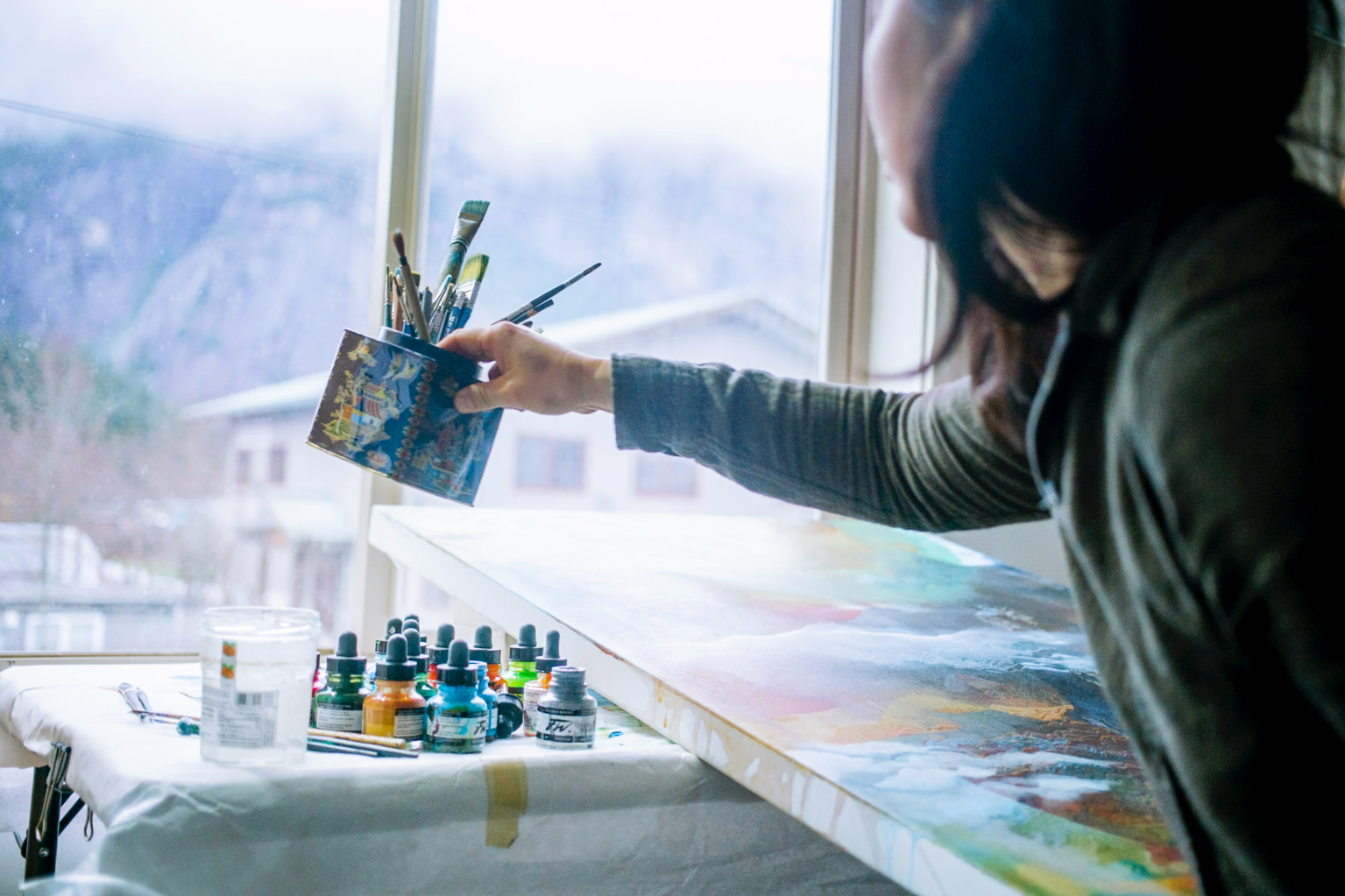
With a stressful school system and strict parents with high expectations, Lan says her salvation came when her parents enrolled her in traditional Chinese watercolour painting. “I’m really glad they put me in,” she says. “Even though it has a lot of rules, the one thing it teaches you is to be very free with your line flow. It was the only class I felt free to move.”
Chinese watercolour is an artform where the actual physical movement of the arm is expressed in the painting. “The feeling of the line is part of the painting. This style is still in my work, I always start with a wash, and line flow is very important to me. I love Rodin for this, even though he is known as a sculptor, he has the ability to translate feeling and motion into a simple line. Leaving it open to interpretation.”

When she was nine years old, Lan’s family moved to Canada. It was a sudden and surprising change of scenery. “We moved to Edmonton originally. The flight landed in Vancouver, so we caught a bus to Alberta and driving through the Rockies was unlike anything I had ever seen before, everything was so wild. It was almost kind of terrifying, but exhilarating, exciting.”
“The struggle of balance,” she continues, “the underlying challenge to not overdo it. I have to forget that there will be an audience and remember just to paint the things I want to.
Lan’s new Canadian art teachers supported her painting, and by the time she entered high school, they had elevated her curriculum to equal the first year of art school. “I was asked to consider how and why I painted.”
This led to the Emily Carr University of Art + Design in Vancouver. After graduation, Lan returned to school and pursued 3D animation after a friend spoke highly of the paycheques. “I hated the projects,” she says, “but I liked the people. And I made a lot of money, but I wasn’t really happy… I was so burnt out and beat down from scraping by in Vancouver. Trying to pay my rent, I was so focussed on that. I left art school thinking I wouldn’t be an artist. I didn’t realize there were people living in their cars.”
This is when she met Ben (her now partner) who lived in a Toyota Tercel with a tiny wood stove (yes, a subcompact car with a chimney). “I didn’t know there was a way to do it differently,” Lan says, “but of course there is.”
“Breaking the rules without breaking the rules… Anarchy sitting still.”
Lan left the animation company she had worked at for seven years and moved to Squamish, picking up odd jobs around town and spending her free time running and climbing. The physical freedom created a space for Lan to gravitate back to painting. “I just like observing and taking in details and what’s going on around me—anything, a certain colour, or a certain shape of a building or a person’s face. Inspiration from tiny details, moments, all put together.”Lan’s relationship with Ben and his life of simplicity has helped her find her happy place, a place that allows for artistic growth. Not that it is always an easy path, but it is hers. “As a full-time artist, it’s been hard,” she admits. “I still enjoy painting, but it’s hard not to think about the money… You gotta live, after all.”
“The struggle of balance,” she continues, “the underlying challenge to not overdo it. I have to forget that there will be an audience and remember just to paint the things I want to. Wake up and say ‘oh, I want to paint this.’ Because it’s the process that I have fun with, it’s not about the finished product. Sure, that’s evidence of the process, but I think it’s more about the experience of the process… I get kind of sad when a project is over. It’s like ‘oh what was the big deal, that wasn’t that hard.’”

Weather or Not
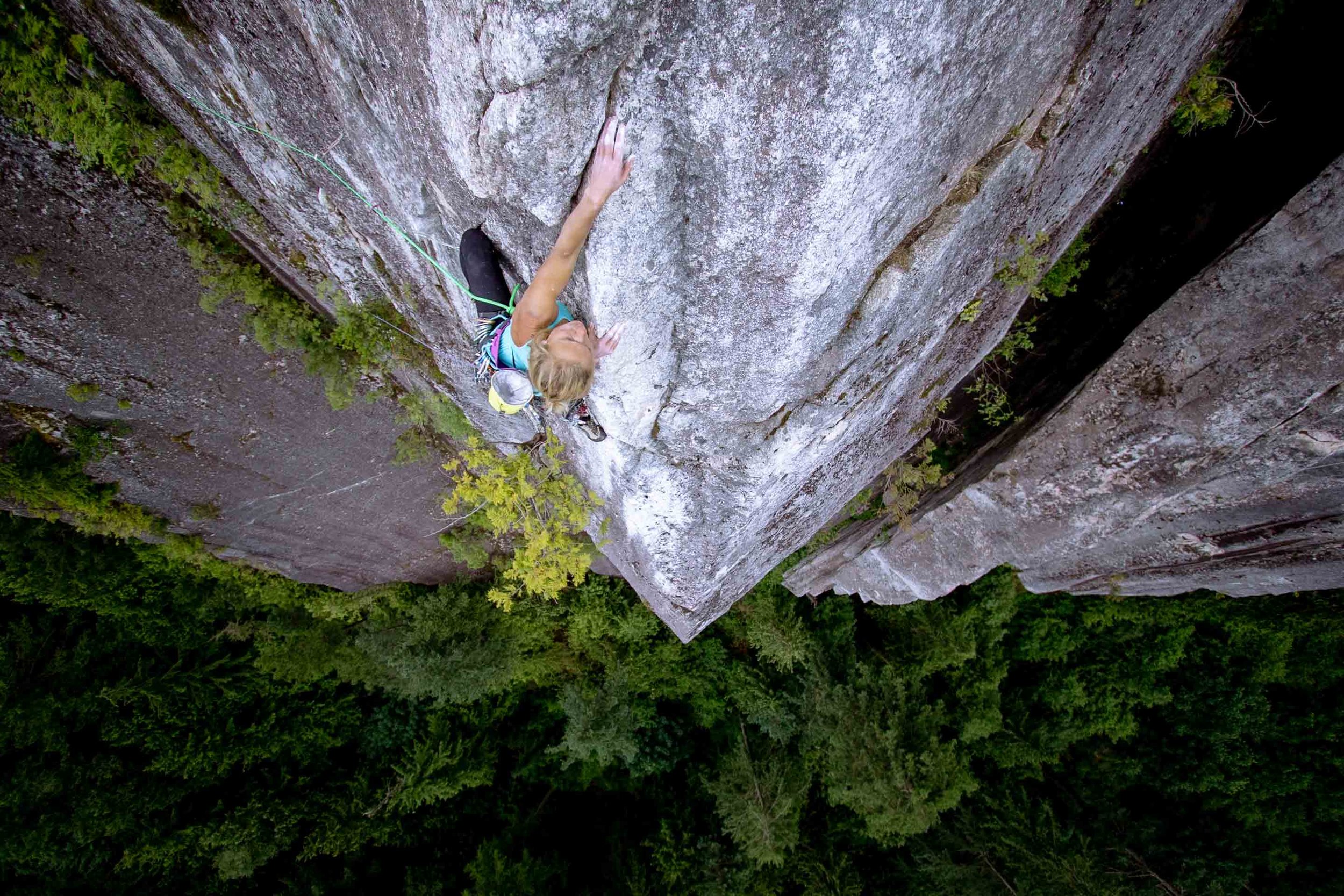
Arcteryx: 48hr photo-challenge. Images from the stones.
Grateful to be a guest of Sḵwx̱wú7mesh Úxwumixw, for the clouds holding their weight and for the company of good people.
Moving Mountains: Saving Salmon
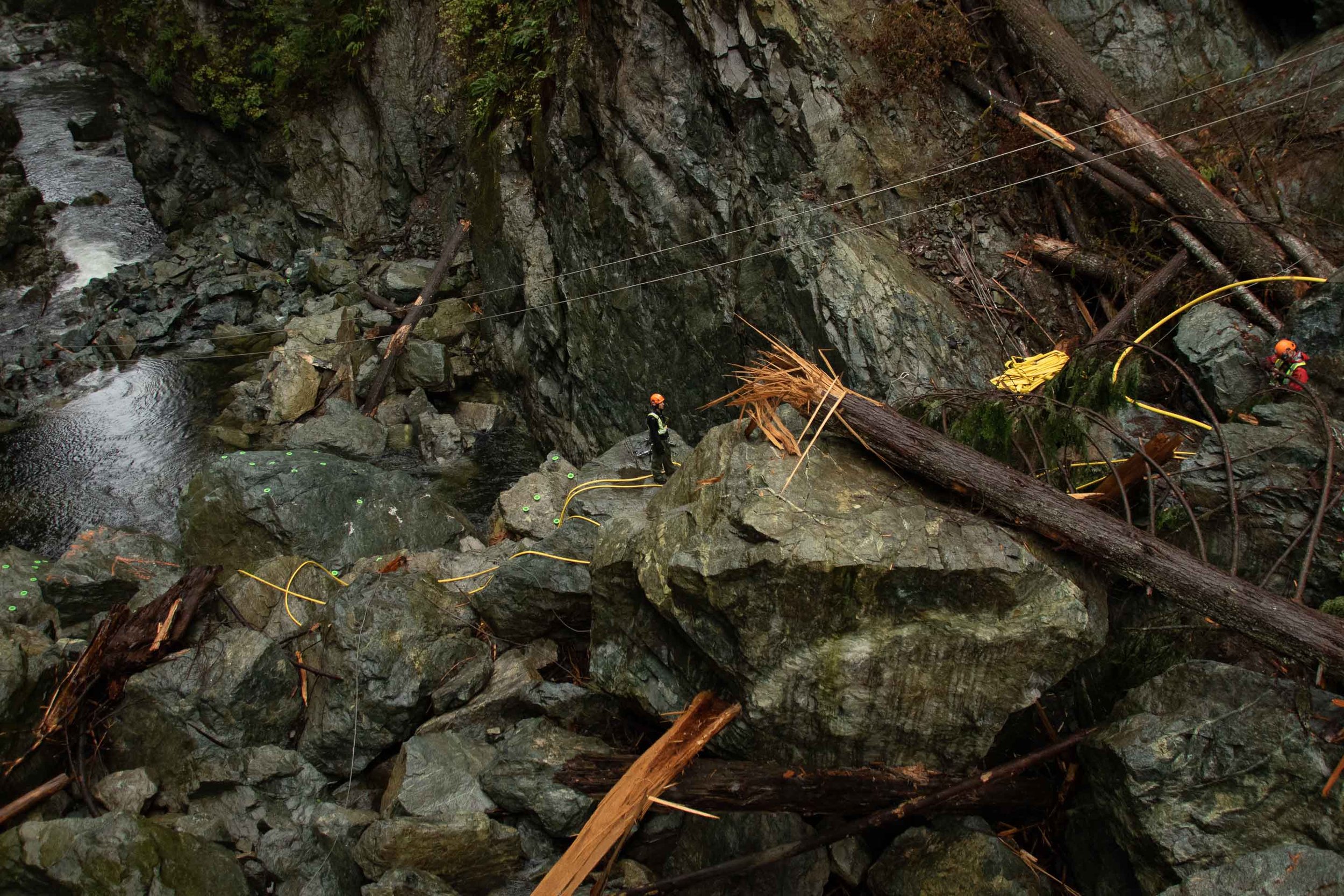
The clamour of hammer drills bounces and reverberates off the sheer rock walls of North Vancouver’s Seymour River Canyon and into the thick rainforest canopy. Down below, workers scurry like ants in high-vis work vests as they haul bright yellow air hoses and air drills beneath an immense rock scar where a 200-foot buttress once leaned out over the river.
That buttress, over 50,000 cubicmetres of rock, came crashing down on December seventh, 2014 and filled the Seymour Canyonwith debris, effectively blocking passage for anything except the persistent flow of water. A situation that is not ideal for the salmon jumping downstream from the slide or the Seymour Salmon hatchery.
The Seymour Hatchery was built in 1977 to counteract the deficit observed in the salmon population following construction of the Seymour Falls Dam. The Seymour Salmonoid Society (SSS), a dedicated group of volunteers took over operations of hatchery in 1987, after initial funding began to dissolve. As informal stewards of the waterway, Smith and the SSS were left to the task of getting the ball rolling and undoing a massive geological event.
Over 80,000 fish (Steelhead and Coho) have 100 per cent of their spawning habitat above the rockslide. “If nothing is done, a lot of themwill die as a pre-spawnmortality,” explains Brian. “They will leave the system entirely, looking for a new location to spawn, or they’ll try to spawn below the slide where the habitat can’t support it.
When he arrived on site and first saw the effects of the slide Smith remembers feeling his heart sink. ““This was more then a problem, at the moment all I could think was; something has to be done. But what? And how?”
“ We were looking at losing the entire Steelhead population by 2019
and only remnants of Coho would remain.”
The first step was organizing a round table involving all concerned parties, stakeholders in the health of the salmon run; this collective was comprised of members of the District of North Vancouver, the City of North Vancouver, Metro Vancouver, Department of Fisheries and Oceans, the B.C. Provincial Government –as well as the two First Nations Bands whose territory the Seymour River passes through, the Skwxwu7mesh(Squamish) and the Tsleil-Waututh(SLAY-wah-tooth).
“We all came together and formed a partnership,” Smith says.,“with the one goal being to reintroduce migration passage through the Seymour canyon for adults and juvenile salmon alike.”
Northwest Hydraulic Consultants was brought in to advise on possible next steps. They brought nine options to the round table and by the end of the discussion the members had agreed on using a low-velocity rock breaking product to reduce the size of the debris, allowing the natural flow of the river to disperse and reshape the waterway. Those worker-ants in the box canyon are operating 45-pound pneumatic rock drills that average about 2,200 blows per minute at 90 PSI (that’s the equivalent to drilling a hole the height and width of a stop-sign post in about an hour).
“A continuous circuit of yellow blasting wire leads out of the canyon to a safe zone and the high-vis ants scurry over the boulders, evacuating the canyon while salmon jump in the waters below the slide, excited and impatient to continue upstream.”
Transporting equipment like that over flat ground is a labourious task in itself. To get them down a cliff and over the debris to the toe of the slide requires a web of ropes, pulleys and expertise to ensure safety. To properly clear the debris will require 1.2 million dollars over 5 years and the Not-for-Profit SSS (with it’s humble staff of three fulltime employees and one seasonal aid) areexpected to raise the money, on top of the regular duties of the hatchery. For the past two years Brian Smith’s life has been bound in the shackles of bureaucracy and fundraising. It seems the fate of the Seymour Salmon is now hinged on the countless e-mails and funding proposals of one man.
But in the canyon; progress. As the team prepares for a blast the canyon buzzes with activity; charges, sand and blast wire are all lowered down to the prepared boulders and as they arrive are loaded, packed and wired together to form a continuous circuit of yellow blast-wire leading out of the canyon to a safe-zone where the blast will be triggered from. Salmon are jumping in the waters below the slide, excited and impatient, trying to get a glimpse of the activity happening upstream. The ants scurry over the boulders evacuating the canyon, a few moments later an air horn sounds 12 times in short succession, a two minute warning. As anticipation peaks, gasses ignite and expand instantaneously, seeking weaknesses in the rock, pushing outwards until –with a pop- the boulders crumble. Smoke rises from the canyon, the salmon jump again, checking on the progress, to see if their way home has been cleared -but behind the three truck sized boulders that have just been transformed into a pile of rubble, a few dozen more sit unmoved and indifferent. The salmon will have to be patient with us.
For more info or to donate hit up http://seymoursalmon.com/
Mountain Life: Coast Range 2017